Options Skew Analysis for Crypto Options
Options skew analysis is usually about one question: where is the market paying up? Traders use skew to compare downside puts against upside calls, and to see whether that pricing lines up with the rest of the surface, the chain, and visible positioning.
Compare relative pricing across put wings, ATM strikes, and call wings.
Use skew as one slice of the broader IV surface instead of a standalone metric.
Cross-check skew moves against OI, flow, and contract activity.
Definition
What options skew analysis actually tells you
Skew analysis looks at how implied volatility differs across strikes. In practice, traders often use it to judge whether downside protection is expensive, whether upside calls are being chased, or whether the curve is flattening back toward neutral.
That read becomes more useful when it is not isolated from the rest of the book. A skew move matters more when it happens alongside changes in open interest, volume, and visible chain behavior in the same expiries.
Use Cases
How skew analysis gets used
- -Check whether downside puts are trading richer than upside calls.
- -Compare skew across BTC and ETH instead of assuming both surfaces behave the same way.
- -Use skew changes together with OI and volume to spot where demand is actually building.
- -Move from a skew read into the live chain where the relevant strikes can be checked directly.
Platform View
How to keep skew analysis practical
Read the wings, not just the label
A skew headline means very little without knowing which strikes are driving it and whether the move is concentrated in one expiry or visible across the curve.
Check surface context
Skew sits inside the IV surface. A change in skew may reflect a broader vol repricing, a local wing bid, or a temporary distortion in one part of the chain.
Cross-check with positioning
Skew is easier to trust when the same strikes and maturities also show meaningful open interest, volume, or repeatable contract activity.
Screenshot
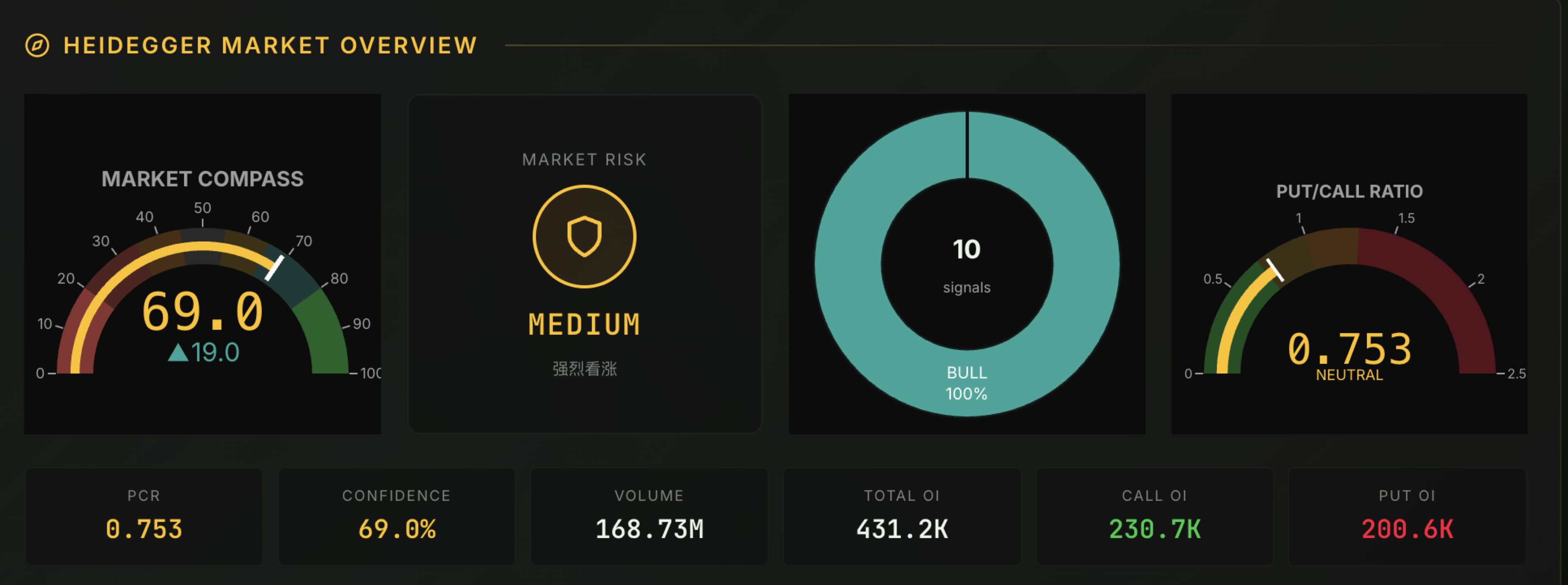
A workflow for reading skew inside the live chain
OIOption keeps strikes, expiries, IV, and positioning in the same view, which makes skew analysis more grounded than reading it as a detached statistic.
FAQ
Common questions
What is options skew analysis?
It is the process of comparing implied volatility across strikes to understand whether puts or calls are relatively expensive and how that pricing changes across expiries.
Why does skew matter in crypto options?
Skew can show where the market is paying for protection or upside exposure. It is often one of the fastest ways to see directional demand that is not obvious from spot price alone.
How should skew be used with open interest?
Open interest shows where contracts are sitting, while skew shows how those strikes are priced. Reading both together gives a cleaner picture than using either one by itself.
Related Pages
Keep the topic cluster connected
BTC IV surface
A Bitcoin-focused page for term structure and surface shape.
ETH IV surface
An Ethereum-focused page for volatility shape and skew behavior.
BTC options dashboard
A Bitcoin entry page for users who want the live interface angle.
ETH options dashboard
An Ethereum entry page for users who want the live interface angle.
Next Step
Turn skew searches into deeper product discovery
A skew page should not stop at a definition. It should lead users into the live market workflow where surface shape, strike rows, and positioning can be compared in one place.